The Honeymoon Is Over for AI
Two years ago, every conversation about artificial intelligence had the same energy: wonder, possibility, a little fear, and a lot of hype. The press treated every product launch like a moon landing. Investors lined up. Founders claimed they were building the most important technology in human history. The public watched it all and tried to figure out whether to be amazed or terrified.
That phase is over. The wonder is still there for some people. But something else is growing alongside it: distrust, resentment, and a growing awareness that the people running this revolution are not doing it for you.
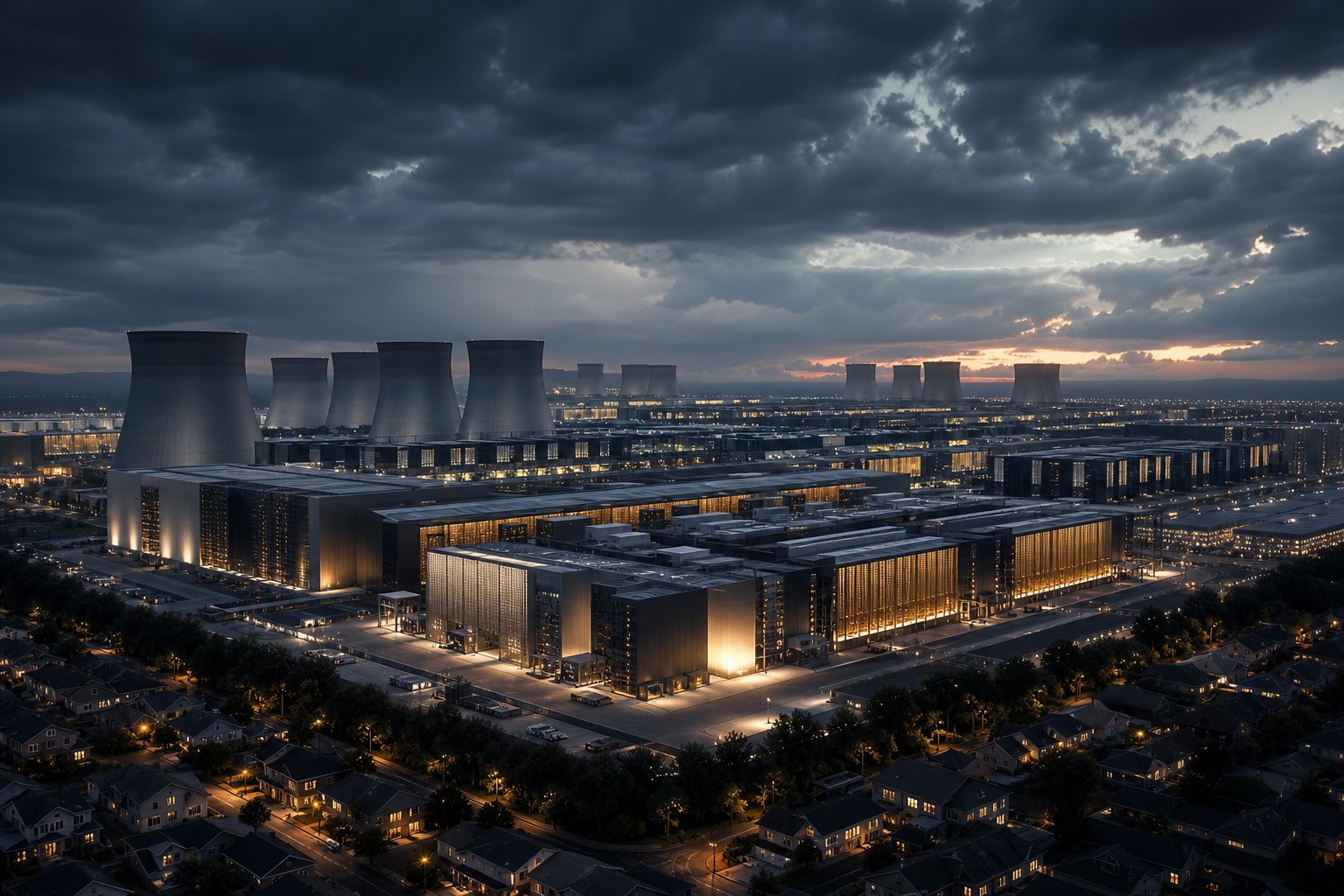
The Data Center Problem Nobody Wanted to Talk About
One of the first cracks to show up in public opinion wasn't about job loss or misinformation or robots taking over. It was about water and power.
Training a single large AI model uses roughly as much electricity as 130 homes consume in a year. IEA Running a ChatGPT query uses approximately ten times the energy of a Google search. Goldman Sachs Data centers already account for about 2% of global electricity consumption. With the AI build-out underway, that number is heading significantly higher.
The companies building these systems need land, water for cooling, and massive amounts of power — and they're siting these facilities in communities that didn't ask for them. In Virginia, where much of the country's internet infrastructure lives, residents in rural counties started pushing back against data center sprawl. In Iowa. In Texas. In Ireland and the Netherlands, where governments have actually begun restricting new data center construction because of strain on the power grid. Data Center Knowledge
This isn't abstract environmentalism. People drive past these facilities on their way to work. Their electricity rates go up. Their water tables get drawn down. And they watch the companies responsible post record profits while asking for regulatory exemptions and grid priority.
The backlash is real, it's local, and it's getting louder.
Who Actually Uses This Stuff
Here's a data point the industry doesn't spend much time talking about: AI adoption in the United States is heavily skewed toward high earners.
A Pew Research study found that adults with household incomes above $100,000 are significantly more likely to use AI tools regularly than those earning under $50,000. Pew Research The gap is even wider when you look at active, paid usage versus occasional experimentation. A McKinsey survey of global knowledge workers found that generative AI use was concentrated heavily in professional services, finance, and technology — sectors that skew wealthy, educated, and urban. McKinsey
The people building AI tools talk constantly about democratizing intelligence, giving everyone access to the power of a PhD. The reality on the ground is a tool that costs $20 a month at the entry level, requires a decent device and reliable internet, and is genuinely useful mainly to people who already work in information-heavy environments. The roofing contractor, the home health aide, the truck driver — AI isn't changing their daily work in any meaningful way right now. They're watching the news about it, though. And they're skeptical.
That skepticism isn't ignorance. It's pattern recognition. They've seen this before. A technology gets launched with promises about how it will help everyone. A small group captures most of the value. Everyone else absorbs the side effects.
The Cash Grab in Plain Sight
Let me be direct about something: OpenAI, Anthropic, and SpaceX are, at their current valuations, extraordinary financial bets that are being packaged as civilization-level missions.
OpenAI raised $40 billion in April 2026 at a $300 billion valuation. WSJ They are not profitable. They have said publicly that they may never be profitable at the current cost structure. Their CEO Sam Altman has been on record asking investors — and now the federal government — for capital at a pace that has no historical precedent in tech. He said in 2024: "We are on an exponential, and the question is just how steep it is." WSJ Translation: give us more money and trust that the curve justifies it.
Anthropic has raised over $12 billion, including massive checks from Amazon and Google. TechCrunch Their pitch is that they're the safety-first alternative — which is an easier pitch to make when you're in second place and need a differentiator. They are also burning cash at a rate that makes a near-term profit scenario look optimistic.
SpaceX is structurally different but worth including because Elon Musk's xAI is part of the same capital orbit. xAI raised $6 billion in 2024 and is building Grok, its AI system, alongside Colossus, a data center in Memphis that residents and local officials have repeatedly raised concerns about — citing air quality permits, diesel generators, and insufficient community engagement. Shelby County Health
Musk, for his part, has oscillated between calling AI an existential threat to humanity and building one of the most aggressive AI labs in the world. His public statements are worth quoting directly: "AI is one of the most profound risks to the existence of human civilization." That was 2023. BBC He said it to justify founding xAI. Which, if you follow that logic, means his plan to address the existential risk is to make sure he's the one holding the leash. The risk isn't the product. The risk is that someone else gets there first.
That's the consistent throughline across all three. The mission framing is genuine in the sense that these people believe what they're saying. But the mission framing also happens to be the perfect pitch for raising unlimited capital with minimal accountability. You can't put normal return-on-investment pressure on a company that's racing to prevent an existential risk. You can't ask hard questions about unit economics when the answer is "we're building AGI." The existential stakes are real — and they're also an extremely effective fundraising mechanism.
The shareholders holding the bag are the ones who got in late, paid the highest valuations, and will be there when the market eventually asks for returns that the cost structure may not support.
This Isn't a Prediction. It's Already Happening.
The backlash I'm describing isn't a future event. It's in the numbers. Searches for AI-related terms that peaked in late 2023 have flattened. Paid subscriber growth at OpenAI, while still significant, is not tracking the curve of the investment thesis. A Morning Consult poll from early 2026 found that only 26% of U.S. adults say they trust AI companies to act in the public interest — down from 35% two years prior. Morning Consult
The honeymoon produced real things. The tools are genuinely useful. The underlying technology is not hype. But the era of unlimited public goodwill — where every announcement was celebrated and every criticism was dismissed as Luddism — is over. What comes next is a more complicated relationship: people using the tools that serve them, while being considerably more skeptical of the companies behind them.
That's a healthy development. The technology is serious enough to deserve serious scrutiny. The companies building it are accumulating enough power to warrant exactly that.
Mike Slatton is a digital marketing strategist and web developer with 30 years of experience. He helps small and mid-sized businesses build brand presence and run paid advertising that actually converts. Work with Mike →